

Thursday, January 5, 2023 at 5:00 PM
Rugby is a game in which the rules change constantly. 2023 is no exception. A number of new guidelines have been introduced to the sport to help speed up the process.
Referees will be given a new set of directives starting January 1, to make rugby easier to understand and more watchable.
What’s next for the sport?
Rugby Acceleration
For far too long, rugby teams have tried to deliberately slow down the game and waste their time. This has been a problem that has angered fans over the years.
Officials will now precisely time penalty kicks and conversion attempts – 60 seconds for a penalty and 90 seconds for a conversion –
It is expected that the Six Nations will have a countdown clock so that fans can see how long it has been since players last took their kicks.
Time-wasting will be further punished by a free kick. This was evident in the last year’s Rugby tournament. Lineout and late scrum will also be penalized with a hand kicke.
Water vector base changes
Since the outbreak of the Covid-19 pandemic, water breaks have been used in the game and perhaps even overused for years.
Water carriers will be restricted from entering the pitch only after a try has been scored.
Rugby’s goal is to use the natural breaks in rugby to hydrate players, rather than stopping the match clock to get water.
Protocol TMO
World Rugby directed that the TMO only be used for clear and obvious gross offences of play and not for lesser-significant lower level offenses.
Referees are encouraged and supported to work together with other officials to make quick decisions that reduce the time spent thinking over 50/50 calls.
Passive rugby
The fourth directive asks governors for a clampdown on minor violations of the law that have been neglected too long.
Trapping players in the rock, avoiding penalties and not playing the game are all examples of offenses that will be more severely punished.
It is often the penalty to infractions. Many of them go unnoticed, or are adjudged due the speed of the game.
Have you ever worked?
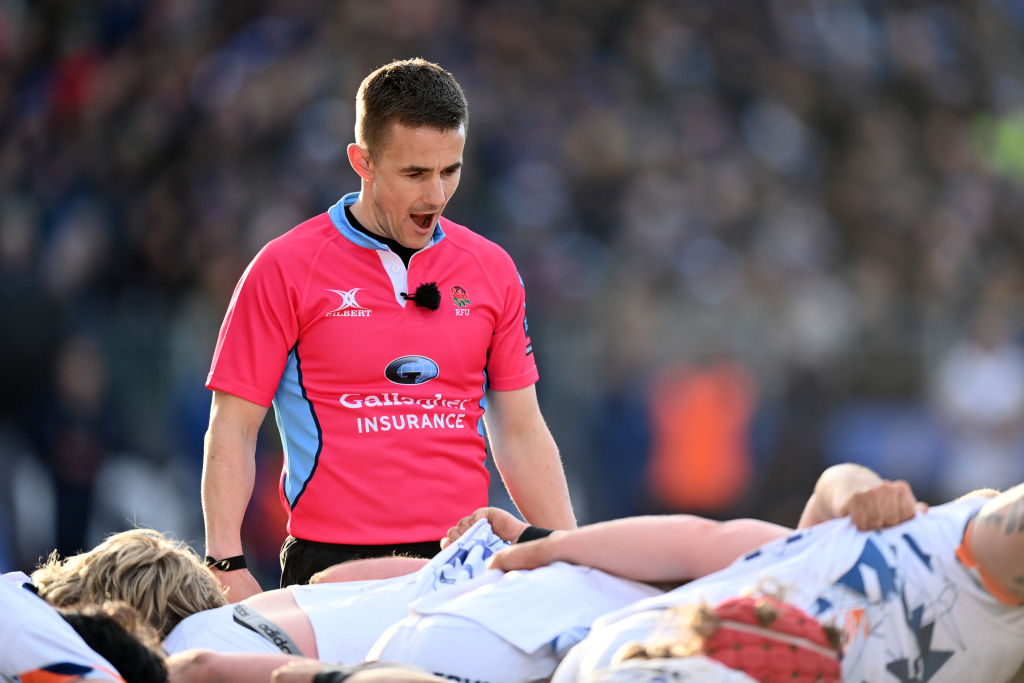
Sunday match between Northampton Saints and HarlequinsPremier League referee Luke Pearce was the star of the Premier League match that was televised under the new guidelines.
He was a constant speaker, almost guiding the teams—and thus the fans—through the pillars and stages. Pierce was quick to assist with a quicker game and was able to communicate well with officials and players to make big decisions within a reasonable timeframe.
This was also evident during the Welsh derby between Dragons, Scarlets. Referee Ben Whitehouse was a vocal official at midfield and spoke clearly when making decisions.
The new rules seem effective, which is a welcome development for those who follow sports. It remains to be seen how long the officials will remain this way.
Source link
[Denial of responsibility! wideworldmag.co.uk is an automatic aggregator of the all world’s media. In each content, the hyperlink to the primary source is specified. All trademarks belong to their rightful owners, all materials to their authors. If you are the owner of the content and do not want us to publish your materials, please contact us by email – at wideworldmag.co.uk The content will be deleted within 24 hours.]
