

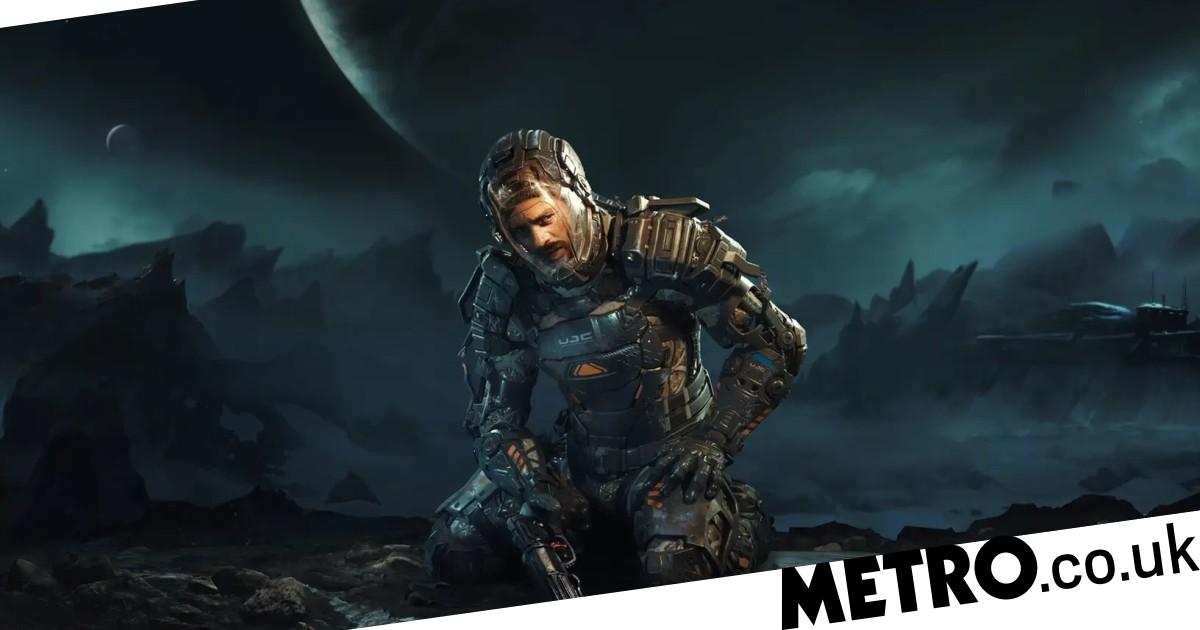

GameCentral is reviewing a spiritual successor of Dead Space by the original author. Is it too similar to the original or too different?
Casual gamers won’t notice, but survival horror fans know that Callisto Protocol can be called Dead Space 4. EA’s original survival horror franchise, Callisto Protocol, is back in fashion with an official Remake of the first gameEarly next year. The Callisto Protocol is a dark, industrial-looking sci fi setting that looks great. However, there are key differences and some are not positive.
The Dead Space series is now at its peak for most people. The second installmentBefore the franchise, the franchise was oriented towards action and not fear. dead space 3. Glen Schofield, who created Callisto Protocol (but he didn’t work on any sequels), directs it. While it’s meant to be a spiritual continuation, it simplifies the process more than it might otherwise. You can expect to forgo puzzles in favor brutal, turn-based combat.
Jacob, the game’s protagonist, embarks on a smuggling trip that ends with his ship landing at Callisto, the dead Moon of Jupiter. This is so named because it’s an utterly barren, rock-and-ice barren ball. This makes it the ideal setting for Black Iron which is a grim maximum security prison in whose custody Jacob is unceremoniously released. It is only a matter if time before the place bursts into flames and is overrun with monsters.
Callisto Protocol is single-player only to maintain its sense of terror. However, despite its strong anti-co-op stance you will spend most of your time working with other characters. The game’s first friend is a cheerful cockney buddy, who gives you a radio and instructs you to do his bidding. Your first monster will be encountered along the way. Although it is not allowed to be called a Necromorph, it is very similar.
It is also the introduction of combat, which uses the left stick to block or duck right and left. You can expect your enemy to take turns with each hit. If you dodge in one direction, you will get your next swing from the opposite side. This is exactly how the tutorial describes it, making it one our favorite gameplay mechanics. The combat system is also incompatible with the game’s over-the shoulder camera view.
The camera is useful for keeping the action in your face, but it often intersects Jacob’s head and body, making it difficult to see what they’re doing when they’re putting down punches. It also often blocks pickups, forcing you to blindly slide down the interact button whenever you’ve recently stamped any enemy corpses, to release ammo or money supplies piñata-style.
The fight is always intense and there’s a strong sense in the air of the fight. It’s bone-crushing and crushing when one connects. But if you miss it there’s a window where your fearsome foes can take advantage of. Battles are never easy, because as in Dead Space you will often see enemies coming up behind and you’re busy dealing with the monster in front.
The credits you get from the remains of enemies can be spent to upgrade your equipment and expand your range. While melee is your stock trade you will soon have access firearms. Their limited ammo makes them more useful for use in combos than making the game a third-person shooter.
Shotguns are useful for shooting the tentacles of enemies as a prelude to making them more dangerous. It’s basically Dead Space’s equivalent of limb-shooting in Dead Space. However it’s not a fun test of shooting and it can be frustrating to miss and end up facing off for much more.
The ‘Grip’ feature, which acts like a gravity gun, allows you to grab enemies and drag them. You can then throw them against spinning machines or one of the game’s spiked walls (something that is notably absent from most NASA spacecraft). . You can roll them up for some good clubbing. However, if there are many enemies at once, it’s not usually a good idea.
The problem isn’t the lack of fear. The combat is undeniably gruesome and bloodthirsty — the animation of Jacob’s death, in particular, is grotesquely entertaining in his final throes — but since there are so many fights, there’s no tension. It makes you jump the first time an enemy appears behind a door that has been opened. Tenth time is not so good.
It is also strange that the combat doesn’t have any puzzles or other distractions. The closest you get to the game is having to find the corpses guards to extract their IDs to unlock locked doors. However, it all boils down into slaying the zombie-infested corridors within the furious space until reaching a room with an officer dead in prison. You can then go back and retrace your steps. This means that combat is the only source of play and the challenge in the game. It soon makes actions seem very simple.

This impression is further accentuated by the fact that the entire arcade wanders in one location. There are a few forks in this road, but they’re clearly marked and always connect after a while, making them purely cosmetic. The passage takes you through the Black Iron prison’s atrocities, deep beneath the ancient colony, and on to the final confrontation. However, the changes you see are only visible – the horrors that you experience are not interactive.
It does a lot of things right. Its facial animations are extremely realistic. The beautifully rendered interiors of postindustrial sci-fi are meticulously designed and incredibly lit. Even the Tomb Raider-style waterslide to death sequences, in which you dodge obstacles and hurtle down a stream, feels quicker and more dangerous than its Lara Croft counterpart.
Also, encounters can change when you die and must reorganize the room. You’ll find monsters in different places, and the pick-ups change, which adds variety to your experience when you have to re-experience more difficult team brawls. This is what is most concerning. There are no puzzles, Dead Space’s signature zero G sections, few places to explore, and very few places to explore. The only thing left is relentless combat.
The fights are violent and often feel desperate but they lack rhythm and variety. The last of usIt is vaguely game-like and never feels as much fun. Although the futuristic setting is impressive throughout, there isn’t much else to it other than endless repetitive battles. It is the unofficial sequel of Dead Space 3. It remains true to its nine year-old inspiration. She needs more ideas.
Summary review of the Callisto protocol
In short:Dead Space 4 is everything it seems, save for the fact that there are no puzzles or suspense. Callisto is full of gritty action, but it’s not enough for the duration.
Positives:Beautifully lit, detailed interiors in industrial sci-fi. Convincing human faces. Combat that uses an unusual sidedodge mechanic.
Negatives:It is almost fearless and was built almost entirely with borrowed ideas. There is no other choice than to fight and soon, the enemies will feel the same.
result: 6/10
Formats: Xbox One, Xbox Series S X/S, Xbox One (reviewed), Xbox One and PC
Price: £54.99
Crafton is the publisher
Striking Distance Studios is the developer
Release date: December 2, 2022
Age rating: 18
E-mail gamecentral@metro.co.ukLeave a comment and Follow us on Twitter.
Continue reading: Callisto Protocol Takes 16 Hours – Entire Game Leaked To Twitch
Continue reading: Callisto Protocol is too bloody to be released in Japan
Continue reading: Callisto Protocol Preview and Interview – ‘This is not Dead Space 4’
Metro Games: Follow us TwitterSend us an email at gamecentral@metro.co.uk
You can use this tool to send inbox message and reader features without having to email. Submit a Stuff page here.
You can read more stories like these. Check out our games page.

Source link
[Denial of responsibility! wideworldmag.co.uk is an automatic aggregator of the all world’s media. In each content, the hyperlink to the primary source is specified. All trademarks belong to their rightful owners, all materials to their authors. If you are the owner of the content and do not want us to publish your materials, please contact us by email – at wideworldmag.co.uk The content will be deleted within 24 hours.]
