

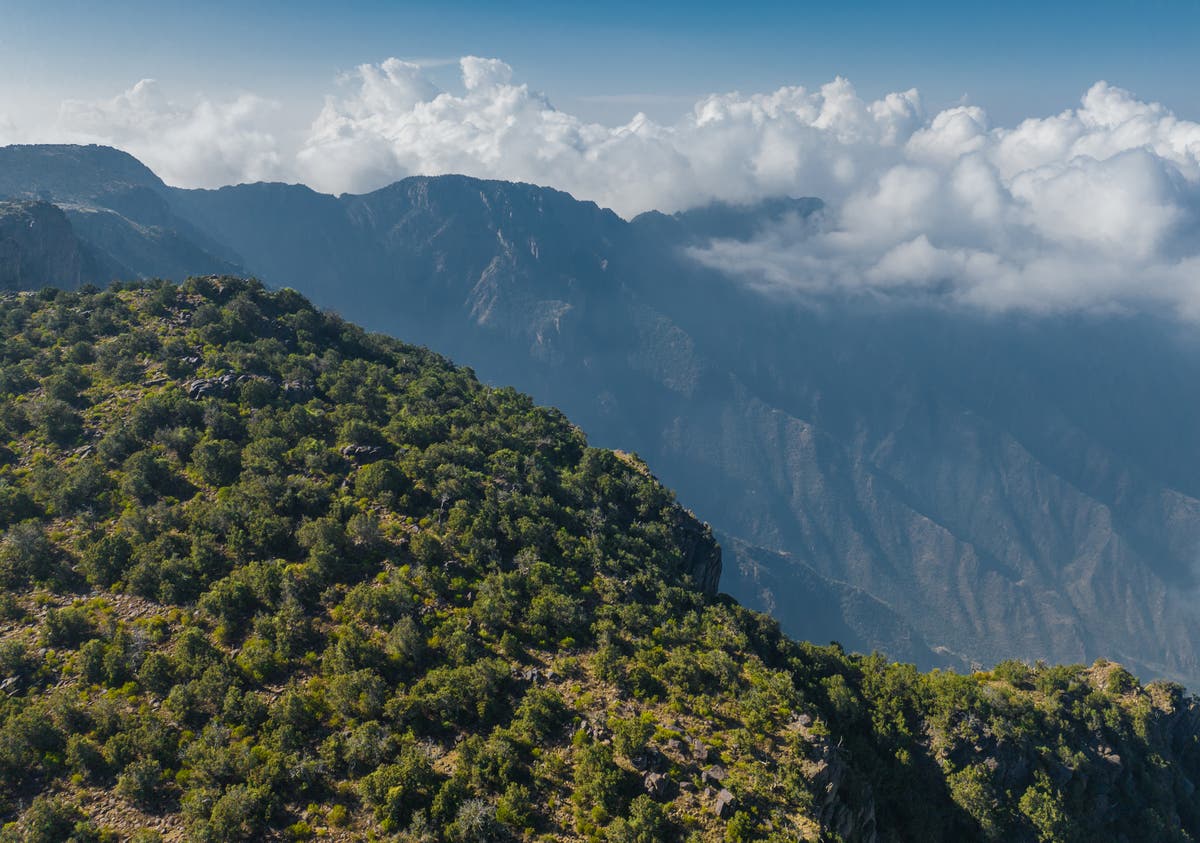

Al-Soudah Mountains
Location: Longitude 42.3° | 18.2 degrees latitude. 650 km southeast Jeddah
Size: 636 km2
Why is it important?
The vision is to create a luxury mountain ecotourism destination, in Al Soudah as well as parts of Rijal Almaa in Asir. By 2030, it is estimated that more than two million visitors will visit the region, contributing around £6.8 billion to the Kingdom’s GDP.
The United Nations recognized the sustainability commitments made by Souda Development for the planned resort. Soudah Development is the only Gulf developer to join United Nations Mountain Partnership, a voluntary organization with more than 400 members around the world that aims to improve the lives of local communities as well as protect mountain ecosystems.
The landscape is being preserved
Saudi Arabia’s Empty Quarter is often the dominant feature of images. These deserts have been conquered by kings, adventurers, and Bedouins thousands upon thousands of years ago. Just 300 kilometers away from the westernmost point of the desert is Soudah. This is the most green and fertile landscape in Saudi Arabia. Cool mountain air, majestic mountains covered with juniper, wild Nature, and valleys shrouded within mist make this contrast not surprising. This region is home to 500 species of plants, such as rare aloe vera, acacia, wild olive trees and lavender fields — and last year, efforts began to plant more than a million trees by 2030.
Al Soudah started last year to plant over a million trees by 2030.
(development of blackness).
Wildlife protection
Iguanas weave through the undergrowth, while beautiful horned ibex, shy caracs (a species lynx), baboons and striped hyenas roam the mountain wilderness.
The majestic Nubian ibex, a magnificent horned horned, has been reintroduced into the wilds of Souda
(Al Soudah Development Company)
The original 15 captive-bred ibex herd has now grown to 23. All of them currently live in natural fencing. They will be released into nature at the end of the year. Their progress will be monitored. Plans are in place to introduce mountain gazelles and other ibex species, as well as reestablishing self-sustaining populations for these ungulates within the Souda Mountain.
More than 140 bird species are found in the area. Here, Bonelli’s Eagles, long-legged Hawks and steppe eagles can be found in the air currents. 14 of the 16 endemic species are found here, including the Arabian Woodpecker which is at high risk of extinction. Small bee-eaters, swallows and warblers are also common migratory birds that travel between Africa and Central Asia.
One of eight babies born in this year’s first year following the release of a herd 15 native caribou into their natural habitat last December. This was done in collaboration with National Wildlife Center.
(Al Soudah Development Company)
Ecotourism is the focus
Trails for hiking wind through valleys that are home to small villages. There are also mountain bike tours, horseback riding and paragliding flights. There are 60 campsites.
Green point of view
The cable car runs near Jabal Al-Tahlal at 3,015m, Saudi Arabia’s highest peak. From there, views stretch out over lush valleys or mountains. There are many ancient architectural treasures to be seen in the area, including mosques and minarets as well watchtowers and mountain forts.
Visit Saudi Green Initiative to learn more. greeninitities.gov.sa/about-sgi/
Source link
[Denial of responsibility! wideworldmag.co.uk is an automatic aggregator of the all world’s media. In each content, the hyperlink to the primary source is specified. All trademarks belong to their rightful owners, all materials to their authors. If you are the owner of the content and do not want us to publish your materials, please contact us by email – at wideworldmag.co.uk The content will be deleted within 24 hours.]
