


Monday, January 9, 2023, 7:35 PM

Sadiq Khan urged Jeremy Hunt not to cut energy subsidies and warned that companies now face a “uncertain future”.
London Mayor, The Mayor of London, stated that helping the capital’s businesses recover from the pandemic is “a huge part in ensuring our broader economic recovery.”
He said that the government must support businesses, charities, public sector organizations and charities through the cost-of-living crisis, especially the hospitality, retail, culture, and other sectors. These sectors are particularly at risk when households reduce their spending.
Business groups also criticised the decision of the chancellor to reduce subsidies for energy bills starting in April and to replace cap rates by a discount. Many argue that this will not subsidize businesses if their energy bills remain high.
Martin McTough, the national president of Federation of Small Businesses (FSB), said tonight that he is concerned that companies will not be able to “survive on pennies” in the latest package.
Hunt said Hunt had made a decision to “everything but aid” and called the new package “outof touch” with reality for companies facing high energy bills.
McTague predicted McTague that the government would “have to come back” at the negotiating table and provide more support in the following months.
The head of FSB warned that “while the new year should be a time for optimism and excitement, 2023 seems like the beginning of a end for tens to thousands of small businesses, who have been counting on government subsidies to survive this winter.”
We are all aware of the financial pressures, but the biggest threat to the industry is the rising energy costs.
Emma McClarkin, chief executive at the British Pub and Brewery Association
Emma McClarkin (chief executive of British Pub and Beer Association) was also against the new package and called cuts to the subsidy program “deeply troubling”.
She also warned that the hospitality industry is still highly vulnerable to rising energy costs. Falling gas prices Not It is expected to be affected by operating costs until later this year.
The industry chief is concerned that the price hikes will be the “last straw” to companies that have struggled for the past three years to provide meaningful services for their communities.
She said: “We have been clear with government about the continued vulnerability of businesses across our industry and the ongoing challenges faced by pubs and breweries.
“We recognize the fiscal pressures, but energy costs are the single biggest threat to the industry right now for the once-strong business.”
Industry criticisms over subsidy packages are the latest in a series of complaints. This follows a survey that found that 51% of businesses with customer-facing locations, such as department stores and hairdressers, nurseries, cinemas, and gyms, would have to raise their prices if the energy bill program was extended. The scheme is not being extended.
Uswitch’s research also showed that one in five (20%) of businesses dealing with the public sector, such as hotels, beauty salons, and gyms, believes they will need to take the same drastic actions, such as closing down operations, downsizing, or restructuring.
13 percent of respondents (more than one in seven) stated that they would not have any choice but to reduce overall staffing.
Hunt unveils corporate discount package
Today Hunt finally unveiled its new energy bill rebate scheme, which is capped at £5.5bn for 12 months from April and will only apply to 70 per cent of the energy businesses use.
The current energy bill relief scheme is estimated to cost taxpayers at least £18 billion over 18 months.
The new package will offer lower discounts until wholesale gas prices reach the price threshold.
For electricity this threshold is £302 per MWh and for gas £107 per MWh.
It also includes a maximum rebate for energy-intensive industries such as manufacturing – set at £40 per MWh for gas and £89.10 per MWh for electricity, in contrast to the current energy bill relief scheme which ends in March.
The chancellor wants to reduce taxpayers’ exposure at historically high wholesale prices in volatile energy markets.
The new package will help companies that had signed contracts before the recent drop in gas prices. It will also help them to deal with the new reality, which is higher energy bills than the pre-crisis levels.
Hunt said in a Treasury statement, that Hunt’s “top priority” is to address the rising cost-of-living – something that both businesses and families are struggling with.
This means taking “tough decisions to reduce inflation” and “providing as many support as possible for families, businesses, and individuals”.
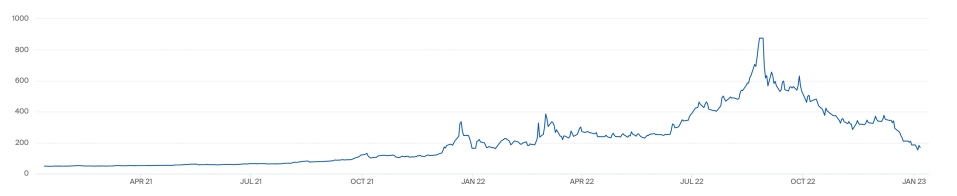
He said: “Wholesale energy prices are falling and are now back to levels before Putin invaded Ukraine. But to provide reassurance against the risk of prices rising again, we are launching a new Energy Bill Discounting Scheme, giving businesses the certainty they need to plan for the future.”
The consultant also confirmed that he had written Jonathan Brearley, Chairman of Ofgem, asking for an update on his review in relation to the non-domestic markets.
This follows reports from companies that had difficulties getting government rebates in their contracts. Renewal costs and standing fees have sent their bills soaring.
Source link
[Denial of responsibility! wideworldmag.co.uk is an automatic aggregator of the all world’s media. In each content, the hyperlink to the primary source is specified. All trademarks belong to their rightful owners, all materials to their authors. If you are the owner of the content and do not want us to publish your materials, please contact us by email – at wideworldmag.co.uk The content will be deleted within 24 hours.]
