

Cost of living crisis The Christmas season saw a lot of misery in households, with the most vulnerable households being twice as likely to be down.
The ONS did a survey this fall and found that people’s mental well-being is directly affected by their environment. High energy billsInflation of double-digits
Many families feel excluded from Christmas because they can’t attend parties or go on school trips, according to food bank coordinators. Many people are experiencing poverty for the first-time.
The survey revealed that 20% of the poorest 20% of households are more likely to experience severe or moderate depression than the 20% richest. More than 25% of renters suffer from mild depression.
The Office for National Statistics also found moderate and severe depression in those who can’t afford energy bills. Those who have to pay less because of high living costs were twice the likely to experience moderate depression. .
Mental illness was the leading cause of economic inactivity in the UK last year, accounting for 18 million lost days. It is estimated that the lost days cost the economy £117 billion annually.
Rosina Aline Khan (Labour’s shadow minister for mental and emotional health), stated: Liz truss mini budget in septemberThis caused the financial markets to collapse and led mortgage rates to rise, contributing to the crisis.
She stated that Labor would eliminate so-called “nondom” status, which allows foreign nationals to avoid paying taxes in the UK on their earnings abroad. Instead, they would spend the money on the NHS.
HuffPost UK: She said that “the disastrous economic policies of successive Tory governments heap misery upon millions this Christmas – but Christmas came earlier for non-nationalists.”
Allen stated, “Labour has a plan for transformation of mental health services, and prioritize prevention,” hiring 8,500 staff in the first term, making sure treatment starts within one month, and providing access a mental health professional at every school and center in every community. Khan.
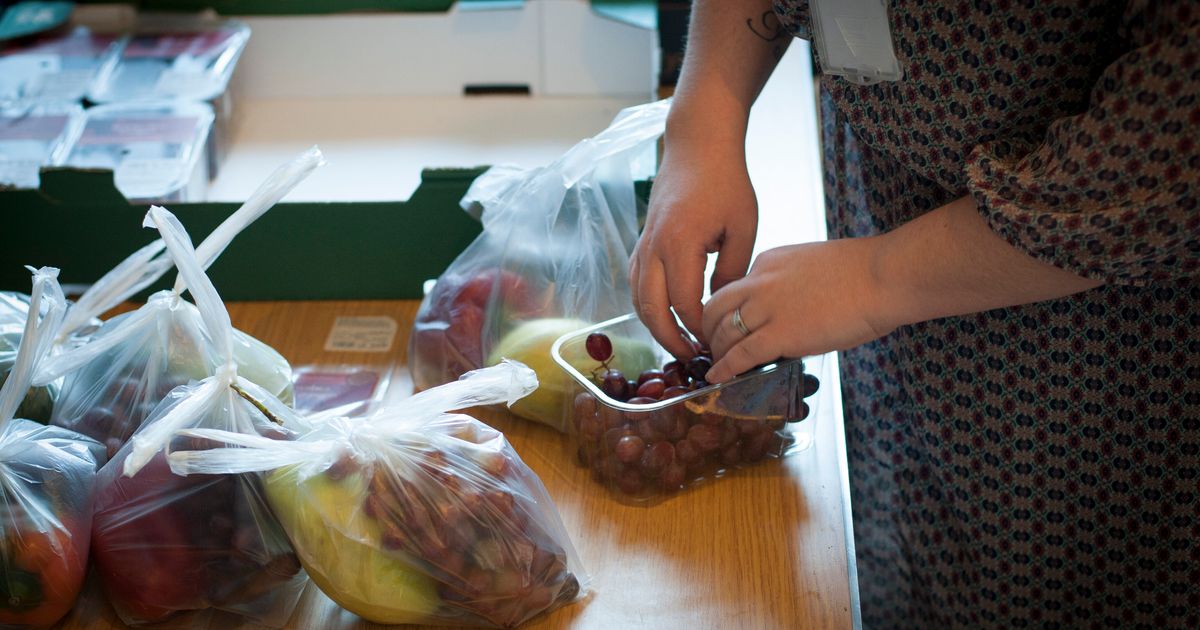
Charlotte White, who coordinates the Wandsworth food bank, said that she has seen an increase in people seeking help for their well-being via the food bank.
She said that many of the guests were struggling with their mental health and are now facing poverty for the very first time, as they suddenly find it difficult to heat their homes or feed their families.
“More and more people are looking for support through an on-site wellbeing service.
“As Christmas approaches, I know many of our families will be feeling particularly anxious. Many will feel excluded, regardless of whether they pay their children to attend a school Christmas party or school picnic, or buy Christmas sweaters for No School Uniform Day.
A separate analysis from Statista found that people living in the North East of England had the least money left to spend over Christmas after losing £189 in their disposable income this year.
It was devoured by households in Wales, who would lose £168 and those in Northern Ireland, who would lose £152.

Little Village, a London-based children’s bank, told a user that this Christmas would be difficult.
They stated that Christmas is “just going to happen as normal”
“I really can’t celebrate the way I used to. It’s so sad that I can’t afford gifts to the kids. My daughter will be even sadder. We won’t eat anything special.”
A Treasury spokesperson stated: “We understand the impact of rising global prices here in the UK and the price tag it can have on people’s mental health.
Which is why tackling inflation is this Government’s number one priority, with a plan to cut inflation by more than half next year, and the typical household will save over £900 as we hold onto energy bills this winter.
“More than 8 million vulnerable households have received an extra £1,200 in cost of living support this year, with another £26 billion support package on the way next year – plus an increase in benefits in line with inflation, worth £11 billion for households in Working age and people with disabilities.
“It is also essential that people can access mental health support during this challenging period, which is why they have invested £500m this year to expand mental health service delivery and address waiting times, as well as committing an additional £2.3bn in funding each year. By 2024.”
Source link
[Denial of responsibility! wideworldmag.co.uk is an automatic aggregator of the all world’s media. In each content, the hyperlink to the primary source is specified. All trademarks belong to their rightful owners, all materials to their authors. If you are the owner of the content and do not want us to publish your materials, please contact us by email – at wideworldmag.co.uk The content will be deleted within 24 hours.]
