


A solution to a grammatical puzzle that has puzzled scholars since at least the fifth century BC was found by A Cambridge UniversityThe professor said that a student could “revolutionize Sanskrit study.”
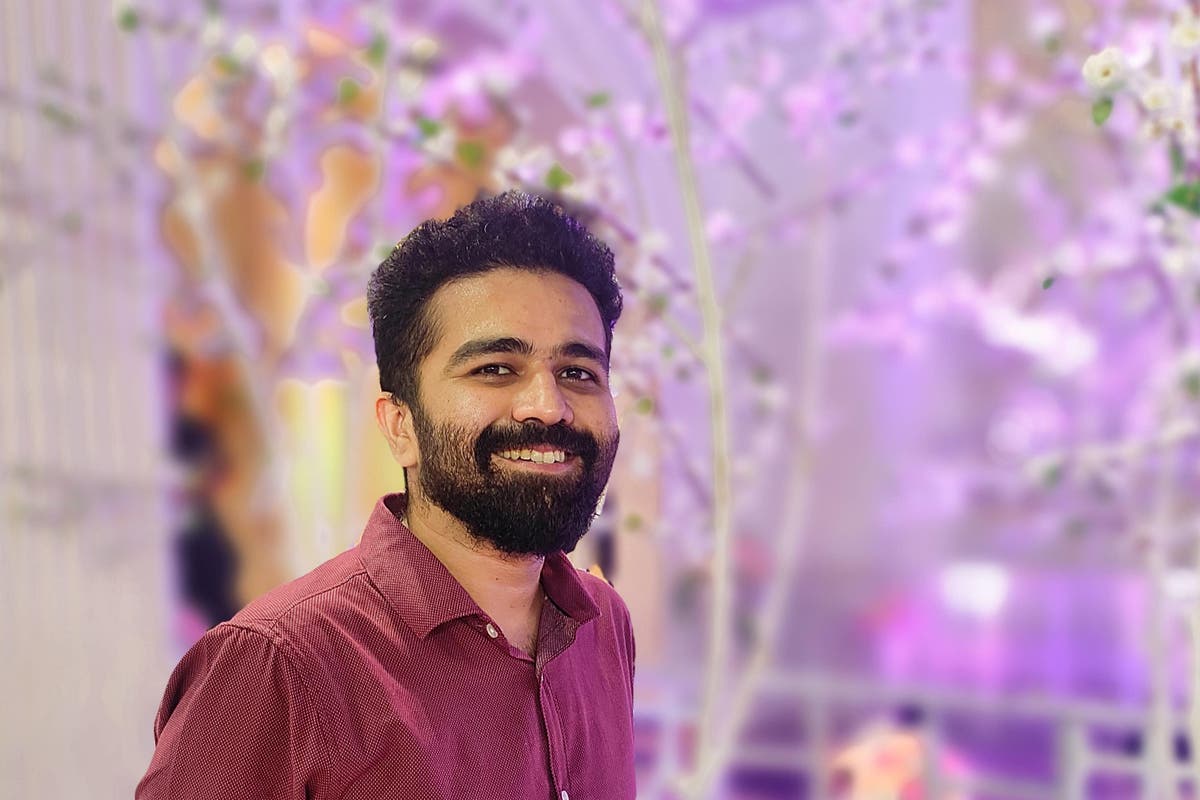
IndianRishi Rajpupat (27) a PhD student decoded a rule that was taught by PaniniA professor of ancient Sanskrit who lived approximately two and a quarter thousand years ago.
Only 25,000 people speak Sanskrit in India, out of a population that exceeds a billion. CambridgeUniversity
It is, however, a sacred language HinduismIt is the medium through which most of India’s greatest science and philosophy have been communicated for centuries.
Astadhyayi was Panini’s grammar. It relied on an algorithm that converts a base and a word suffix into grammatically accurate words and sentences.
However, multiple Panini rules can be applied simultaneously, which can lead to a rule conflict.
Panini taught “metarule”, which scholars have always understood to mean: “In case of conflict between two rules with equal strength, the rule that comes later in the sequence of grammars wins.”
However, it often led to grammatically wrong results.
Mr. Rajpupat rescinded the traditional interpretation of metarol.
Panini, he claimed, meant that there are rules that apply to both the left and right sides of a word. Panini wanted us all to choose the rule that applies on the right side.
Rajpupat used this interpretation to find that Panini’s “language-machine” produced grammatically correct sentences almost without exception.
Mr Rajpupat claimed he had an “eureka moment” following the advice of Vincenzo Vergiani (Sanskrit professor at Cambridge): “If the solution to your problem is complicated, you’re probably wrong.”
He said: “I had a eureka moment at Cambridge.
“After nine long months of trying to solve the problem, I was about ready to quit. But I was determined to stay.
“So I closed the books for a month and just enjoyed the summer, swimming, cycling, cooking, praying and meditating.
I reluctantly returned to work. Within minutes, I began to see patterns in the pages and it all started to make sense.
“It was a lot of work, but I finally found the most important piece of the puzzle.
“For the next few weeks I was so excited, I couldn’t sleep and would spend hours in the library including in the middle of the night checking what I’d found and solving related issues.
“This project took two and a quarter years.”
He stated, “Some Indian’s oldest wisdom was created in Sanskrit. We still don’t fully understand the achievements of our ancestors.”
“We often believed we weren’t important, that our contributions were not enough.
“I hope this discovery infuses students in India with confidence, pride and hope that they too can achieve great things.”
He hopes it will be possible now to teach Panini’s grammar computers.
Professor Vergiani stated that Rishi, his student, solved the problem. This was a problem that has puzzled scientists for centuries.
“This discovery will revolutionize Sanskrit study at a time when the language is growing in interest.”
Source link
[Denial of responsibility! wideworldmag.co.uk is an automatic aggregator of the all world’s media. In each content, the hyperlink to the primary source is specified. All trademarks belong to their rightful owners, all materials to their authors. If you are the owner of the content and do not want us to publish your materials, please contact us by email – at wideworldmag.co.uk The content will be deleted within 24 hours.]
