

For anyone who has ever dreamed of standing on Antarctic ice or watching the Northern Lights from the Arctic Circle, a quiet development this August matters more than it might first appear. Türkiye has published a new book linking its polar research programme to zero waste principles, and followed it just ten days later with a cooperation agreement in London that could shape how climate-conscious travel and scientific tourism are discussed on the world stage.
The polar regions have become one of travel’s most sought-after frontiers, drawing expedition cruises, research tourism and increasing public fascination with the Arctic and Antarctic. But these are also among the most environmentally sensitive places on Earth, where even small amounts of waste or resource use can have outsized consequences. That tension between access and preservation sits at the heart of both announcements made this month by The Zero Waste Foundation.
A handbook for cleaner polar exploration
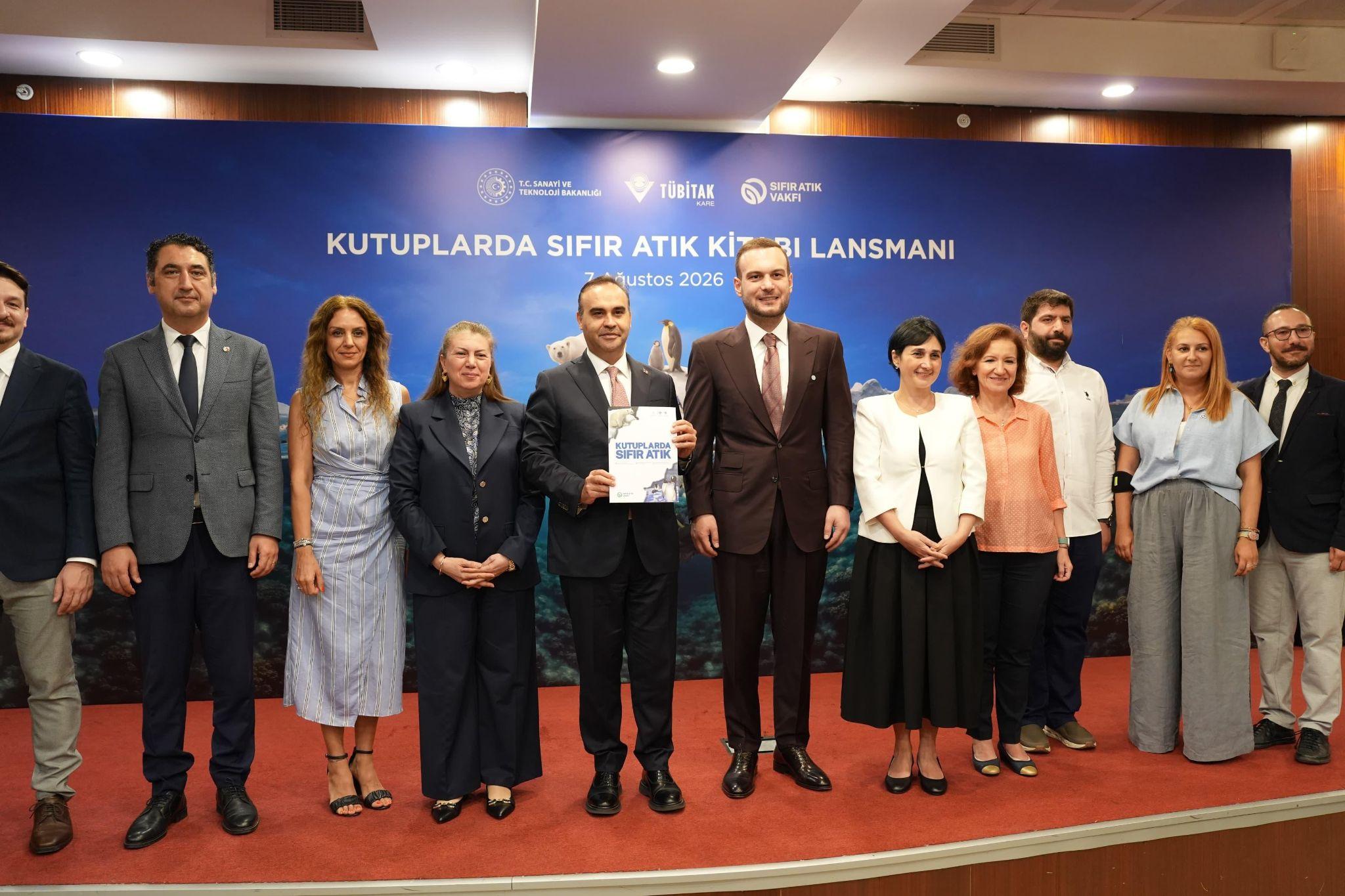
On 7 August, the Foundation launched “Zero Waste in the Polar Regions”, a book prepared with TÜBİTAK’s (Scientific and Technological Research Council of Türkiye) Polar Research Institute. Rather than focusing narrowly on rubbish collection, the publication examines how scientific expeditions to the Arctic and Antarctic can reduce their environmental footprint at every stage, from planning and logistics to how energy, water and materials are used in the field.
The book brings together 18 articles from scientists who have taken part in polar research, covering the scientific, technical, administrative and communication dimensions of applying zero waste thinking to some of the world’s harshest and most remote environments. For an industry built on expedition travel to these same regions, the parallels are hard to miss: reducing waste before it is generated and using resources efficiently are challenges familiar to any operator running trips to the poles.
The publication also frames the Arctic and Antarctic as critical indicators of global climate change, noting that environmental shifts observed there carry consequences well beyond the ice itself. That framing gives the research relevance far beyond the polar science community, extending into how the wider world, including travellers, thinks about fragile ecosystems.
Mehmet Fatih Kacır, Minister of Industry and Technology of Türkiye, said the book brought together two national initiatives that both began in 2017. “The Zero Waste initiative launched under the leadership of H.E. Emine Erdoğan has grown step by step from a national initiative into a global one,” he added.
“At the same time, we began organising scientific expeditions to Antarctica and the Arctic under the auspices of the President of the Republic of Türkiye, enabling Turkish scientists to strengthen the country’s presence in polar research. Through this book, these two initiatives have come together.”
The study also reflects the wider zero waste vision advanced by H.E. Emine Erdoğan, Founder of the Zero Waste Movement, Chair of the UN High-Level Advisory Board on Zero Waste and Honorary President of the Zero Waste Foundation.
London link connects polar lessons to global climate travel networks
Ten days after the book’s launch, the Foundation signed a cooperation protocol with London Climate Action Week (LCAW), an event that draws government, business, finance, academia, civil society and local communities together each year. The agreement covers climate action, zero waste and the circular economy, and is designed to strengthen knowledge exchange and joint initiatives between Türkiye and the London-based network.
The protocol was signed by Samed Ağırbaş, President of the Zero Waste Foundation and COP31 High-Level Climate Champion, and Climate Action Founder and CEO Nick Henry. “After this cooperation protocol, I hope we will carry out strong work and organize joint events at COP31 and London Climate Action Week,” Ağırbaş said.
For travellers and the tourism industry, the significance lies in the connection being drawn between resource efficiency in extreme destinations and the mainstream international climate conversation happening in cities such as London. Sustainable travel to the polar regions has often been discussed in isolation, but this agreement places it within a broader circular economy dialogue that includes cities, businesses and financial institutions, the same stakeholders shaping future tourism policy.
Why COP31 raises the stakes for polar destinations
Türkiye’s preparations to host COP31 provide the wider diplomatic backdrop to both developments. While the immediate focus remains on practical exchange between the Zero Waste Foundation and the LCAW network, the COP31 connection signals that zero waste and circular economy approaches, tested in some of the planet’s most extreme research environments, are being positioned as part of a larger international climate agenda.
That matters for travel because the Arctic and Antarctic are not abstract case studies. They are real destinations that increasing numbers of visitors want to experience, often precisely because of their remoteness and vulnerability to change. A framework developed for scientific expeditions, one that reduces waste before it happens and manages energy, water and logistics carefully, offers a template that expedition operators, polar cruise companies and even individual travellers could look to as demand for these journeys grows.
The combination of the polar research book and the London partnership does not reduce zero waste to simple recycling or rubbish management. Instead, it links scientific research, resource efficiency and circular economy thinking to international climate action, with polar regions serving as both the proving ground and the warning sign. For an audience that travels to witness these landscapes firsthand, that link between exploration and responsibility is likely to become harder to ignore.
