

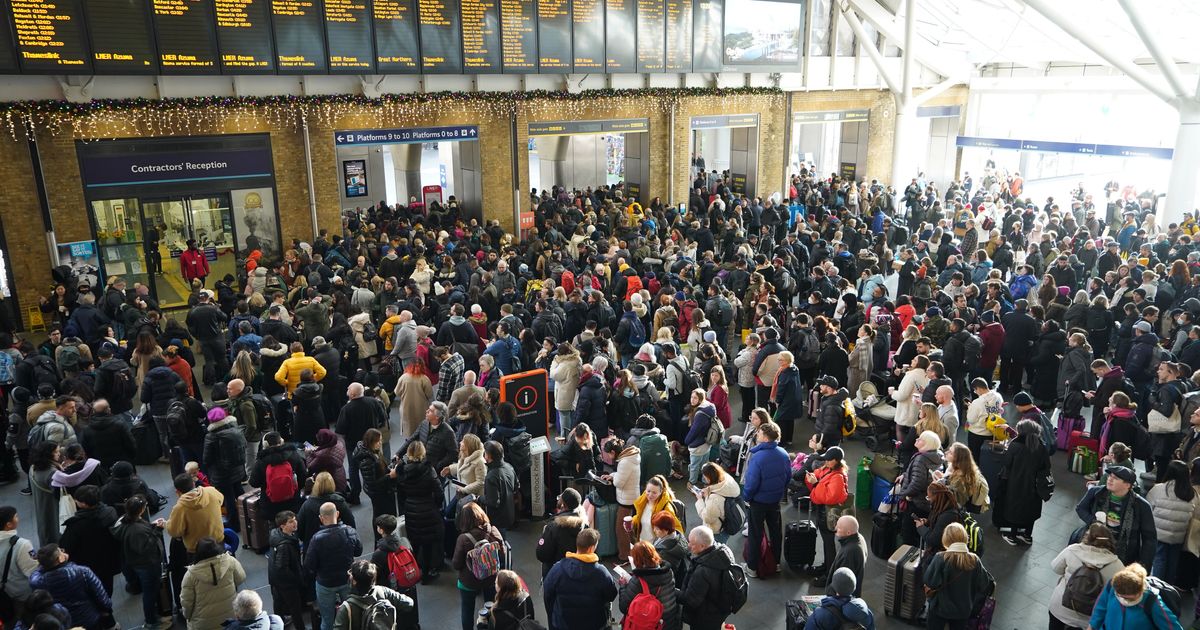
Mick Lynch accuses the government of “blocking” an agreement to end strikes on railways.
Ministerial interference by ministers was described Monday by the secretary-general of Rail, Maritime and Transport Union (RMT).
The government denied that the union had claimed it was a major obstacle to ending the bitter dispute.
This week’s strikes will cause travel chaos. RMT drivers and members have been striking at the Aslef Theatre.
Around 40,000 RMT members will be taking action on the rail network, and 14 train operating companies on January 3, 4, 6, and 7. This will result in the shutdown of most rail services across the country.
Services will be paralysed on Thursday due to a one-day drivers’ strike. Passengers have been urged not to travel unless absolutely necessary.
RMT stated that, despite its best efforts during Christmas, the railroad employers had not organized formal negotiations to resolve the dispute.
A statement said that both Network Rail and Rail Delivery Group were prevented from submitting acceptable proposals on job security, wages, and working conditions by ministers.
“RMT remains available around the clock for talks so that all parties can reach a negotiated settlement.”
RMT stated that this is in stark contrast with other areas of railways where the DOT doesn’t have a mandate.
According to the union, it has agreements with Transport for Wales and Scotrail as well as contracts on Eurostar and areas controlled by metro mayors.
“The government is blocking the union’s attempts to reach a negotiated settlement with the railway employers,” Lynch said.
“We have worked with the rail industry to reach successful negotiated settlements since privatization in 1993 and have secured cross-network deals in 2021 and 2022 where DfT is not involved.
However, there is an unprecedented amount of ministerial involvement in this dispute, which prevents the railway employers being able negotiate with us a package, so that this dispute can be settled.
“We will continue our Industry Action campaign while we work towards a solution.”
RMT strike days will see about half the network shut down, and only 20% of normal services resumed.
Trains that run later than usual will start and end earlier than usual, with services running normally between 7.30am to 6.30pm on the day.
Thursday’s strike of train drivers will impact 15 operators and result in fewer services running. Some companies may run “extremely low” schedules.
A spokesperson for the Department for Transport stated that passengers are tired of rail strikes, and they want disruption to stop.
The government has shown that it is reasonable and willing help to resolve railway disputes. It is time for the guilds too to get on the same page and play their part.
“Inflation-matching wage increases for all public sector workers will cost everyone more in the long run – exacerbating debt, fueling inflation and costing each household an extra £1,000.
To end this destructive dispute and start 2023, the unions must take a step back from this strike.
Source link
[Denial of responsibility! wideworldmag.co.uk is an automatic aggregator of the all world’s media. In each content, the hyperlink to the primary source is specified. All trademarks belong to their rightful owners, all materials to their authors. If you are the owner of the content and do not want us to publish your materials, please contact us by email – at wideworldmag.co.uk The content will be deleted within 24 hours.]
