

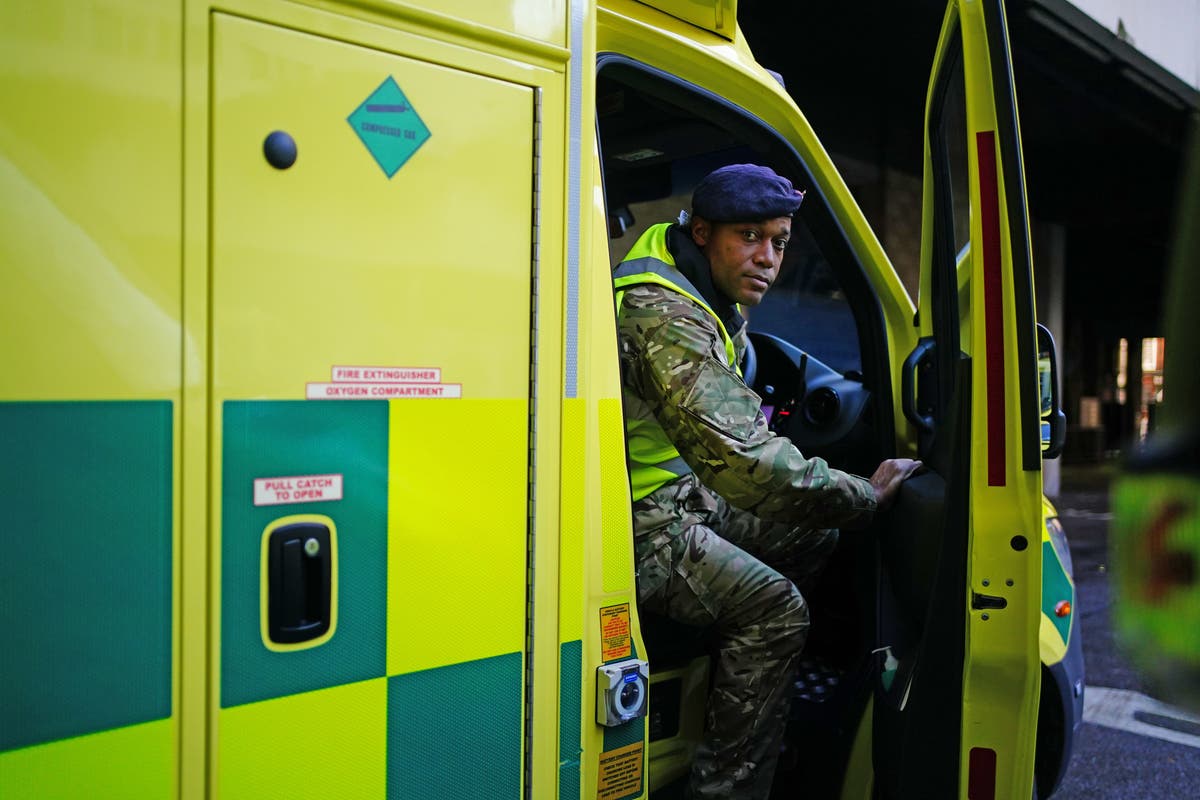

NHSHealth chiefs warned that leaders cannot protect patients during strikes and expressed concern to the prime minister by urging him to reopen negotiations on wages.
In an emergency intervention Matthew TaylorChief Executive Officer NHS FederationTo Rishi SunakThey demand an end the impasse with unions striking over wages or terms.
On Tuesday, thousands took part in a second strike by nurses. Paramedics and paramedics will strike on Wednesday.
In a letter addressed to the Prime Minster, Mr Taylor stated that “This isn’t something NHS leaders would say lightly. But many are now telling me they cannot guarantee patients are secure tomorrow.”
“We have clearly entered dangerous territory, and that’s not for health reasons.”
Mr Taylor urged the prime minster to end the government’s dispute against the unions as soon as possible and asked Mr Sunak to “be ready to negotiate on the core issue of wages payments”.
The letter also stated: “With less that 24 hours remaining before the ambulance strike, there are now deep concerns among NHS leaders over the level of harm to patients tomorrow.
He said that it was rare for leaders of hospitals, ambulance services, and other vital health services to express concern like he did.
Mr Taylor spoke on BBC Radio 4’s World At One program. He stated: “We don’t want to scare people. But we have come to a point where our leaders feel it necessary that they say they can’t guarantee patient safety, and they cannot avoid risks as these unfold.” This is the end result.
“We are particularly concerned about the ambulance workers’ strike tomorrow but we are concerned about the possibility of further strikes.
If there is no agreement, an industrial walkout will occur. If an industrial walkout occurs, there will likely be harm to patients.
Matthew Taylor, NHS Confederation
“We have increased our appeal to warn that we are in a very dangerous period. government And to the trade unions for trying to find a way to resolve this dispute and help us get through the winter.”
He stated, “We simply must say that if government refuses to negotiate wages it appears that negotiations will never take place. If negotiations do not take places, then there will inevitably be an industrial walkout, and if that happens, there will also be a risk that patients will be hurt.”
“It is our responsibility to make it very clear to the public and politicians as well as trade unions.”
The unions representing ambulance workers are currently meeting Steve Barclay, Health Minister. However, the government has indicated that it will not change the issue about wages.
Downing Street had earlier acknowledged that Mr Sunak did not chair the Cobra meetings on crisis or meet with unions.
On Tuesday, the row with the paramedics and nurses of the NHS were not discussed at a cabinet meeting. Instead, discussions were focused on the plans for the coronation in 2023.
When asked whether Mr Sunak should personally participate in efforts to end strikes, the official spokesperson for Prime Minister stated that: “The Prime minister works closely and is closely involved with the government’s approach.
“But the government has accepted the recommendations of independent wage review boards, and we don’t believe it would be right for us to add the political component that would involve the prime Minister directly.”
Rachel Harrison, GMB national secretary, said that ambulance strikes would proceed if the health minister was not willing to discuss wages.
When she was asked what would happen to wages if the government didn’t act, she answered that: “It will ultimately be our members who decide…We will continue to say, to the government, Our door is open for talks about wages’.”
“Our members will be the ones to decide which pay offer is made and if there is no pay offer coming soon, we will continue to have that conversation next year as we head towards the next round of pay discussions as well.”
There are two categories of ambulance responses. Category 1 covers cardiac arrest and category 2 covers stroke, heart attack and sepsis.
Ms Harrison said that workers would cover Category 1 and suggested that agreement could also be reached in most areas for the other categories.
“Most of these agreements have been signed. We are doing our part by informing our members about what they are and encouraging them to adhere to the exclusions that have been placed,” she stated.
Ms Harrison stated that coverage will vary depending on the service but added: “We will make every effort to ensure safety for communities during this measure.
“The government must play its part and they have to come up and talk to us.”
Sharon Graham, Unite leader, said that it was time to call a spade “a spade”.
Unions have committed to providing coverage for tomorrow’s life-threatening emergencies (Category 1) and serious conditions like strokes and heart attacks (Category 2)
“This has been agreed by a number of local NHS trusts.
“Frankly speaking, the government is trying to mislead the public and creating panic.
Source link
[Denial of responsibility! wideworldmag.co.uk is an automatic aggregator of the all world’s media. In each content, the hyperlink to the primary source is specified. All trademarks belong to their rightful owners, all materials to their authors. If you are the owner of the content and do not want us to publish your materials, please contact us by email – at wideworldmag.co.uk The content will be deleted within 24 hours.]
