

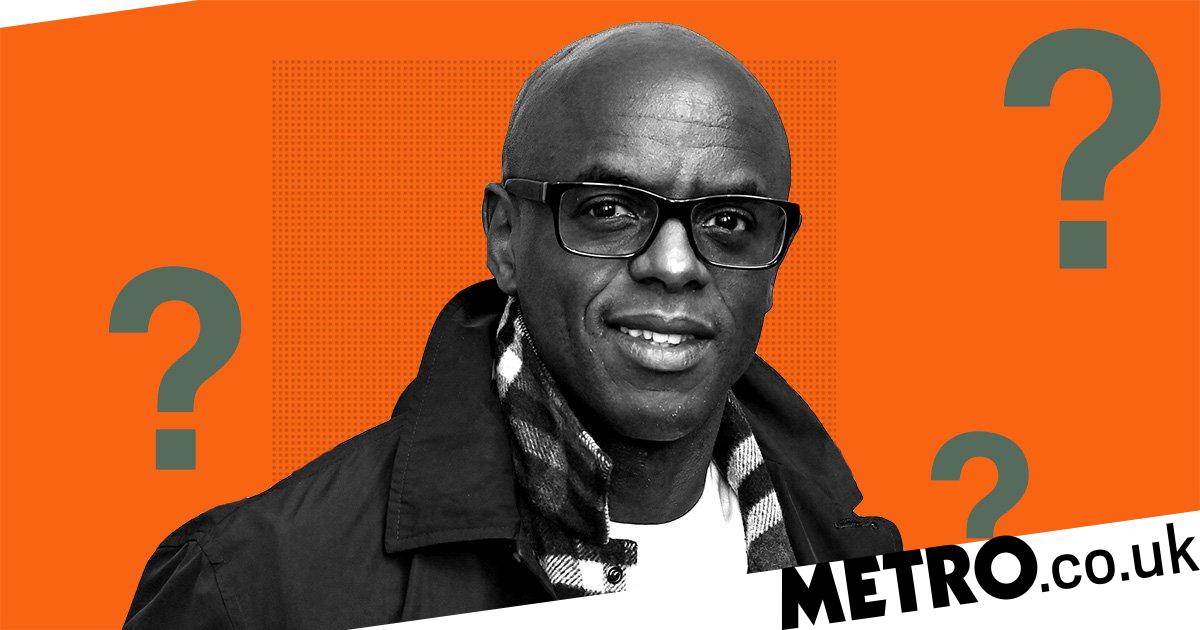
WMetro.co.uk is your home The big questionsWe ask the big questions, but also the smaller ones. This week, Trevor Nelson is our guest.
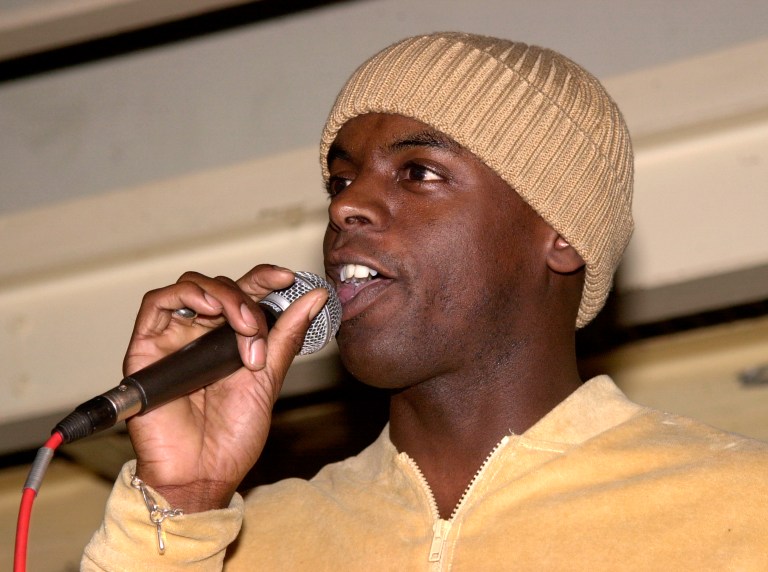
The internationally acclaimed radio DJ has made a significant impact on the British music scene over the past decades. He started with Kiss FM in 1980s, when it was still a pirate station.
Trevor was a fixture in clubs throughout London and went on to work for BBC Radio 1 where the first ever radio program was presented. Ever Rhythm Nation is a national RnB radio show that gives the now mainstream genre a platform it’s never had in the UK.
Trevor has been a key player on Radio 1Xtra’s flagship radio station for years. He is incredibly proud that he won a Mobo Award 1997 and an MBE 2002.
Trevor has an impressive international career on MTV and an annual summer residency at Ibiza. He is still very busy. This December, Trevor will be presenting a special show at London’s Royal Albert Hall.
This was something you always wanted to do as a child.
Music was something I loved from a young age. But I never imagined that I would be able to work in music. I didn’t like him at all, but I loved him.
It was something that attracted me. I wanted to make money so I could buy records and equipment. But I never believed it was possible. I had a passion and never imagined I would be a radio DJ.
Because I didn’t know anyone like me.
The hacksaw was the only way I came to my senses. [radio]Legal radio, by people offering me work, rather than me being ambitious like young people who know what their dreams are.
There is a lot more clarity now. My generation was accustomed to “just get a job”. It was very dangerous. It can cause havoc in your heart. We didn’t imagine, we got jobs.
Like I said, I planned everything. But I didn’t plan anything!
You don’t need someone to look up to, but you are the person to many people. What have young people said about you?

“Yes, God, sure.
I hear it more now that I did when I was a DJ. People wanted to be a DJ in the same way you were years ago. I was hosting a large party that many wanted to go to – MTV/Radio. This was a strong position to be musician.
Now, however, I’m constantly shocked at the number of people who say, “Oh gosh! I was!” [that person].
Stormzy was speaking about his family and how he grew-up with people like me when I interviewed him. You think that’s exactly what you’ve done for him!
Children grow up seeing people like me on the TV, listening to the music they love. It’s something we didn’t have before I get breaks at Radio One, MTV, and Radio One. It was truly special. It was so special.
What was your biggest takeaway from Stormzy’s encounter?

I find him a fascinating character, a complex, intriguing person – and that is the human being I met.
Most of the presenters I have met over the years, particularly rappers from America are very alpha. They put on a show. You can’t be below it, it’s a game. But Stormzy chose outright weakness.
It’s almost impossible to imagine what you would expect. He is a spiritual man but he’s a stomping one. He is fascinating to me. I have a lot of emotion with him. I learned a lot from him, that he is open to being honest.
I’m often called the nice guy because I’m a DJ and I’m black. But, the truth is that I’m just as geeky as anyone else on the planet, and I’m just as boring as anyone else. I don’t think I’m cool, so I don’t go into a room. I love to walk my dog, fish and play golf. I’m just like every other man. I don’t wake up thinking “What cool thing can I do today?” Stormzy does that.

It’s so powerful that it made a completely different record. He didn’t need to make this record. He could have made another record with stomping and all the kids loving it. He will lie to himself and not to him. He is very brave and wants to do what he desires in that moment.
Honesty is something I hope other interviewees take away from this interview. In interviews, be honest. I can understand why the front-line people are lying – the ’90s were filled with lies about artists, their backgrounds, and what they believed. We didn’t have social media or the internet to reach these artists. The record company made the decision and everything changed.
You’ve been a public person for a while. How has this changed since the advent of social networking?

I’m so thankful I had my career before social networking, I’m so happy! I don’t think I could have missed the endorsements everyone gets these days, nor the huge following. [my]MTV had international shows and I was subject to scrutiny for all I did.
I feel like I have lost some of my confidence [if social media was around then]. Despite what many people may say, they hate criticism. I hate criticism!
My job is always a judge of me. I’ve been in situations that made me feel like “Forget your boss, it’s the crowd who is judging you.” Once you make a mistake, you’re done. It takes just one. Think of all the times I’ve spoken to the radio, thousands, or even thousands. It’s absurd that 99.9% of what I’ve done has been helpful and honest. I could make one mistake, and it’s over.
I am so grateful that my career was established before social media. Back then, if you wanted to file a complaint, you had to write a letter — or at least an email. You can just click on something with your phone now.
It worries me. At the end of it all, if 18 again, wouldn’t I want social networking? Will I go back to the days where you traveled by bus, car, and train to New York to get old school records? It was fun, but it was time-consuming and expensive.
But I doubt I would be able to reciprocate it today. I have so many wonderful memories and so much sincerity. I’m not sure if I would have the career that I have.
I was the original national RnB radio station with Rhythm Nation – Now How Does It Feel is one of the most popular mainstream genres.

Looking back, I see how difficult, challenging, and amazing it was all. I was a completely different person the moment I had the opportunity. When I walked in, I was like, “Right, this is what I’ll do, this is what we need, this is what we need.”
My career is always referred to as “we”, which I refer to as me, the music and my relationship with the music I play. I felt it needed more platforms, it should have more exposure. It was good enough to me to be more successful, and I wanted to be part of that.
It’s been 26 bloody decades, it’s crazy.
How did you notice? Things can change What has changed over the years?

The club scene was extremely important [then]. You had to dedicate yourself to a radio show. Music is everywhere now. It is everywhere, all at once. I don’t mean to criticize young DJs and I don’t want them to be dismissed. However, it is less reliable.
You don’t need to sit down and think “It’s 9 p.m. I have to listen,” because you can listen whenever it suits you, and you can even download things. There is plenty of competition. Anyone who is passionate about music can make their own playlists. However, they don’t have the need to become too involved in culture to love it. It’s good music. Any music can be mainstream as long the audience wants it.
Nobody can say that my single didn’t play well on Spotify, but it’s not my fault. It’s there.
And the scene is quite different. I wouldn’t say that he suffered, but I do think he’s different. My daughter wanted DJing, she’s so talented and does it the same way as her dad. She doesn’t even use my dads name.
Because she kicked my name, I wouldn’t even say hers! But there is a disconnect that exists between music and clubs, which didn’t exist back then.
People have been to clubs, and they won’t go out unless the DJ is known. They go to clubs because they know the DJ and it’s the best place to party or drink.
You were a pioneer. BBC Radio 1Xtra, which turns 20 in this year’s, was also a pioneer. What do you think about this?

1Xtra is so crucial to all black musicians. Ask musicians and they will tell you that 1Xtra was the first time they were given a national play. It’s not about big hits. It’s about smashing artist and keeping that conveyor belt going.
There has never been a black musician who hasn’t participated in a Live Lounge, or received an early break… 1Xtra is the epicenter of the black music scene. The evolution was amazing. We had some artists who went to major labels when we were just starting out. They did well. They were rare.
10 years later, 1Xtra was born. It’s no coincidence that 1Xtra is a conveyor belt more smooth than MC’s or singers. It’s a much larger industry. After many years working at Radio One, that’s why I joined 1Xtra.
Never in my career have I seen so much black music reproduced. There are so many producers and so many broadcasters. It was great to have been there. It was really rewarding.
Trevor Nelson: What was your weekend like?
Where can we find us on a normal Saturday?
Because I still DJ, it is not easy to find a hotel room in the middle if you are in the middle of nowhere. I am usually miserable in a hotel room, as I can’t sleep in hotel beds.
Sometimes I return from work tired from the night before. Sometimes it’s the first day of the week when I have some time for myself. If I’m really interested in doing anything, I go to my garage. There is a little screen that I can use to hit my balls against. After every shot, I do squats. It’s not exciting, I’m afraid.
I have always worked on Saturdays so I didn’t know what a weekend felt like.
I go to Chelsea every football season. I have been a season ticket holder for over 25 years. I either go to Stanford Bridge to watch a home game, or I jump for joy if there is nothing to do on Saturday. It’s so rare!
Continue reading: BBC Radio 1Xtra’s Nadia Jai remembers ‘selfless’ Jamal Edwards after helping launch her career: ‘He was quite literally an angel’
Continue reading: DJ and producer Nathan Dawes reveals his fear of flying
Source link
[Denial of responsibility! wideworldmag.co.uk is an automatic aggregator of the all world’s media. In each content, the hyperlink to the primary source is specified. All trademarks belong to their rightful owners, all materials to their authors. If you are the owner of the content and do not want us to publish your materials, please contact us by email – at wideworldmag.co.uk The content will be deleted within 24 hours.]
