
Tuesday, November 8, 2022, 11:44 am
city in the morning It was revealed two week ago Six London companiesIt agreed to merge into the new stakeholder solution entity backed Falfurrias Capital Partners.
The merger is quite unusual considering that six different companies were able access a merger deal. These included Ballast Research and Hamilton Place Strategies, Flag Media Analytics and Flag Media Analytics.
These companies were part of the research paper and have been officially renamed as Penta, a stakeholder solution company that combines intelligence with strategy capabilities.
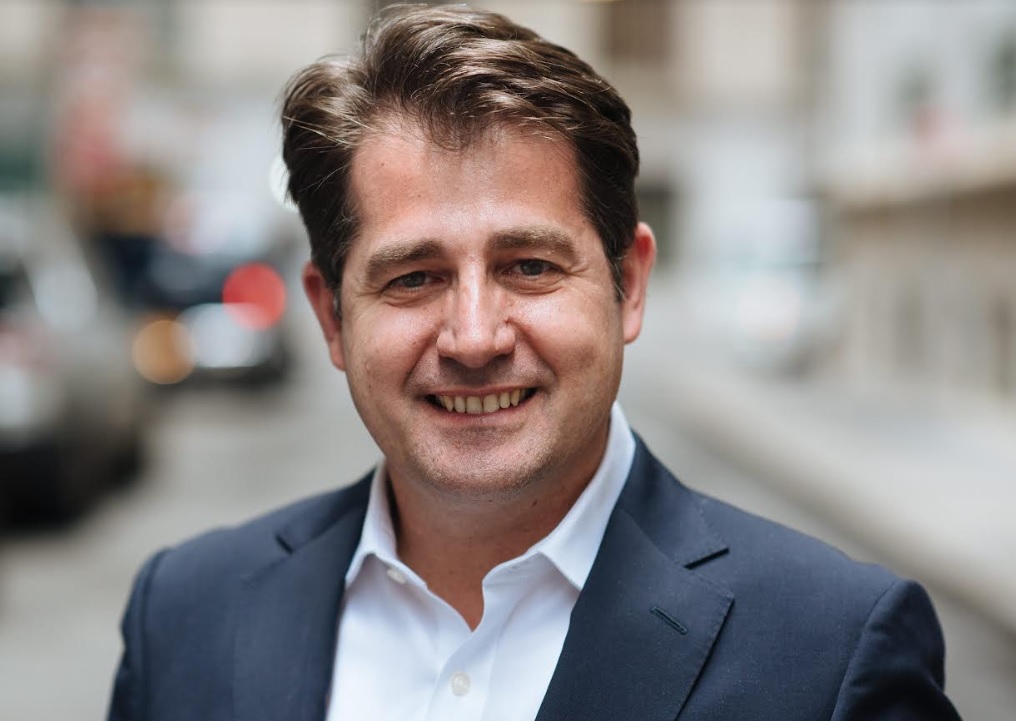
. Time city in the morningWe met Alberto Lopez Valenzuela, who was until recently the CEO of Alpha, one the six merged entities.
Lopez-Valenzuela, today’s co-chair of the newly formed group, explained the concept behind the deal.
“This recognition means that there is a need to have an integrated and connected approach for all stakeholders solutions,” he said.
The group now employs around 200 people in London and New York, Washington, San Francisco, and Washington after the merger.
Falfurrias Capital Partners plans to add more agencies and units to Penta, in order to “extend” the company’s international reach.
Pinta will be presided over by President Matt MacDonald who was a Hamilton Place Strategies partner for more than a decade.
“By combining intelligence tools with advisory capabilities, we will work with clients to help understand, anticipate and mitigate the impact of stakeholder issues, as well as enable understanding between business leaders and stakeholders,” Lopez-Valenzuela continued.
Issues affecting stakeholders
What does a city veteran refer to when they speak of stakeholder issues?
Lopez Valenzuela explained how such issues could be environmental and focus on business ethics, employee welfare, and any other issue that impacts stakeholder expectations.
“But it happens when there’s a gap between stakeholder expectation and the behavior or company.”
This gap creates resistance from stakeholders, which increases the cost of doing businesses.
He stressed that even in the worst cases, it could have a devastating and devastating effect on the company’s reputation, finances, and possibly even lead to the collapse of well-known companies.”
Although these issues seem to be shaped primarily by changes in social trends or activism by pressure groups Lopez Valenzuela quickly asserted that companies can impose order upon such issues.
Many problems seem to follow the exact same life cycle.
The problem might be dormant for a while but could suddenly become a significant problem due to social change.
“Smart companies can anticipate problems before they arise, by monitoring the right stakeholders.”
Alberto Lopez Valenzuela
He stated that they can avoid crises by bridging the gap between corporate behavior and stakeholder expectations as early as possible during the issues life cycle.
“That’s why stage one is the most crucial stage in the issues cycle: potential problems.”
Lopez-Valenzuela said that “in this first stage, it is possible to identify potential issues before these affect the organization and communicate effectively with stakeholders to better comprehend their expectations.”
He said that companies need a data driven issue management process to achieve this. “To deal with the risk of the problem turning into a reputational or operational crisis, they must have this process.”
Mismatch
Stakeholder intelligence is the core of issue management. It can identify issues early in the issues cycle where there is a mismatch between stakeholder expectations and company behavior.
Stakeholder intelligence is the core of issue management. It can help identify issues early in the issues cycle where there is a mismatch between stakeholder expectations and company behavior.
“The organization needs a connected and coordinated approach to issue management,” Lopez-Valenzuela explained. “This highlights the need for an individual or individuals within the organization to act as a liaison force – to be connected leaders.”
“Connecting leaders can ensure that the functions involved in the organization work together and address problems in a joint manner by bringing together communications, policy, general counsel, sustainability, and operations,” he concluded.
Source link
[Denial of responsibility! wideworldmag.co.uk is an automatic aggregator of the all world’s media. In each content, the hyperlink to the primary source is specified. All trademarks belong to their rightful owners, all materials to their authors. If you are the owner of the content and do not want us to publish your materials, please contact us by email – at wideworldmag.co.uk The content will be deleted within 24 hours.]
