

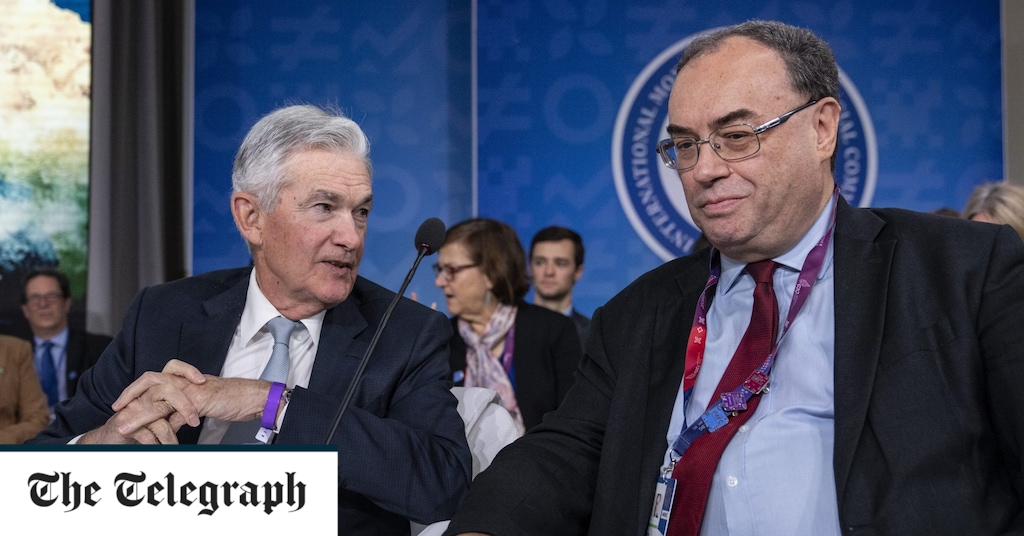

After the US Federal Reserve announced a sharp rise in borrowing costs for the fourth consecutive week, the Bank of England is now preparing to raise interest rates.
Andrew Bailey, the bank governor, is under increasing pressure to follow the Federal Reserve’s lead and raise interest rates by 0.75 percent.
A 0.75 point increase would return the bank’s interest rates to the November 2008 levels. Raising costs for millions of mortgage borrowers.
It would be the bank’s eighth consecutive rate rise, the largest since 1992, when policymakers tried to save the pound by rushing to do so.
The bank had been expected to announce its interest rate decision after an autumn statement by Jeremy Hunt, the chancellor, outlining how it intends to plug a £40bn gap in public finances.
The statement was due to be published on Monday of this week, but it was delayed to mid November. The Treasury will closely monitor market reaction to the interest rates announcement. A decision on possible cuts is imminent and ministers will meet to discuss the defense buget on Thursday.
Rishi Sunak and Mr Hunt are said to be planning to extend the windfall tax on oil and gas companies to raise £40bn over five years. According to The Times they will increase the rate by 30 percent and extend tax until 2028.
It was suggested by a senior executive from Nationwide, one the country’s largest mortgage lenders. Home prices can go downIn the worst case, Britain could fall into a prolonged recession and see a rise of up to 30% next year.
Markets expect that the bank’s rate-setters will vote for a 0.75 percentage points increase at the MPC meeting. However, they have not yet made a decision and some economists are calling to see smaller or larger increases.
For homeowners with a £200,000 mortgage, this increase in interest would typically add £84 a month to their payments, or just over £1,000 a year. This will immediately affect homeowners with a tracked or floating rate mortgage.
It would however raise the bank’s policy rate to a fourteen-year high of 3.3%. However, this would still be behind the Federal Reserve, whose benchmark rates are now targeting a range between 3.75% and 4% after four consecutive increases at 0.75 points.
Source link
[Denial of responsibility! wideworldmag.co.uk is an automatic aggregator of the all world’s media. In each content, the hyperlink to the primary source is specified. All trademarks belong to their rightful owners, all materials to their authors. If you are the owner of the content and do not want us to publish your materials, please contact us by email – at wideworldmag.co.uk The content will be deleted within 24 hours.]
